 ALERT
ALERT
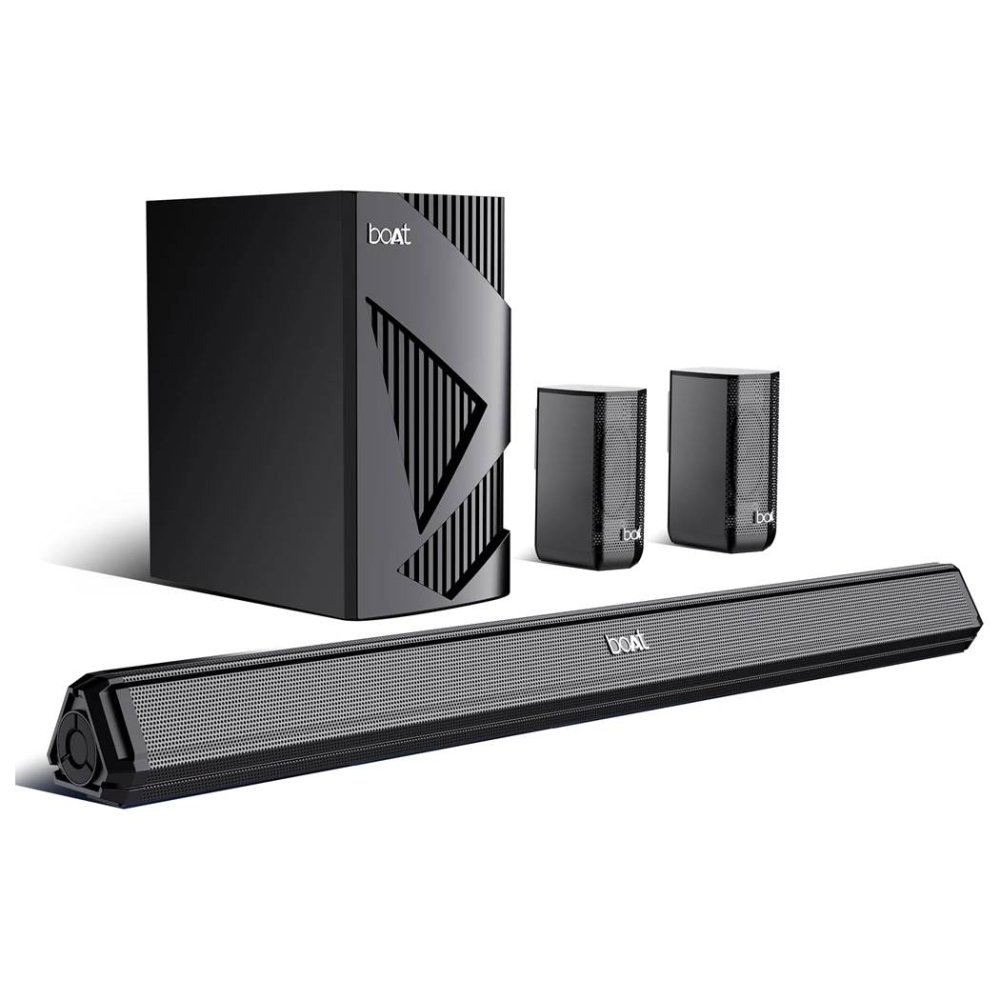
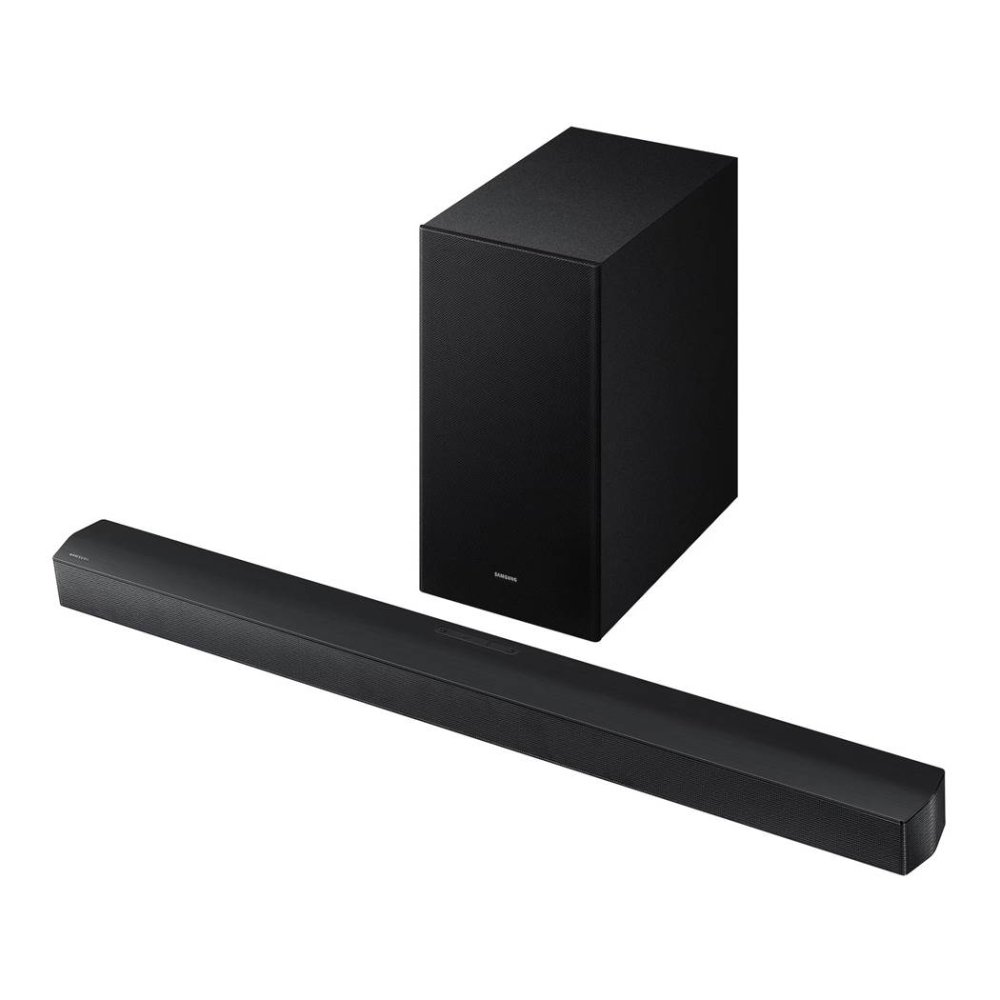
boAt Aavante Bar 3200D Pro vs Samsung HW-B650F/XU
Advertisement
| Specification | ||
|---|---|---|
| Price | 39990.00 |
38505.44 |
| Brand | boAt |
Samsung |
| Model No | Aavante Bar 3200D Pro |
HW-B650F/XU |
| Wired / Wireless | Home Theatre Speaker Specification |
Home Theatre Speaker Specification |
| Driver Type | Digital Audio Power Amplifier |
Dynamic |
| Driver Diameter | Sound Bar : 58 mm X 90 mm X 3 Subwoofer : 165.1 mm Satellite : 58 mm X 90 mm X 2 |
NA |
| Impedance | 3Ω1 + 8Ω3 + 8Ω X 2 |
NA |
| Sensitivity | Sound Bar : 800mV±50mV Subwoofer : 400mV±50mV |
NA |
| Frequency Response | 45Hz - 20KHz |
20Hz - 20 KHz |
| Maximum Power Input | AC 110~240V, 50/60Hz |
Operating Power Consumption : 24 W Operating Power Consumption ( Subwoofer ) : 48 W Power Consumption Standby : 0.5 W Free Voltage |
| Maximum Power Output | 400 W ( RMS ) Surround Sound Channel Configuration : 5.1 |
370 W ( RMS ) Center Speaker Number of Speaker 4 Wireless Subwoofer Included Surround Sound Channel Configuration : 3.1 |
| Signal to Noise Ratio | ≥70dB |
NA |
| Noise Cancelling | ||
| Aux Connectivity | Yes |
No |
| Weight | Unit Weight : 7.70 Kg |
Net Weight Main Speaker : 2.2 Kg Net Weight Sub Woofer : 5.0 Kg Set Weight : 9.0 Kg |
| Dimensions | Satellite : 160.2 mm X 96.34 mm X 74.97 mm Sound Bar : 900 mm X 91.3 mm X 79 mm Subwoofer : 372 mm X 324.5 mm X 190 mm |
Main Speaker : 860.0 mm X 59.4 mm X 75.0 mm Sub Woofer : 184.0 mm X 343.0 xmm X 295.0 mm Packaged Dimension : 925.0 mm X 445.0 mm X 235.0 mm |
| Available Colors | Black |
Black |
| Accessories | boAt Aavante Bar 3200D Pro Home Theatre Speaker 1 UNIT User Manual 1 UNIT AUX-IN Cable 2 UNIT AAA Batteries 1 UNIT Warranty Card 1 UNIT Power Adaptor 1 UNIT Remote Control 1 UNIT Screws For Wall Mount |
Samsung HW-B650F/XU Home Theatre Speaker Remote Controller Wall Mount Bracket |
| Other Features | DSP For Crystal-Clear Sound : Aavante Bar 3200D Pro is designed with a high-performance Digital Signal Processor ( DSP ) for an enhanced listening experience. 400 W boAt Signature Sound : Featuring 400 W boAt Signature Sound, this soundbar is your perfect audio companion for hosting watch parties with a larger-than-life feel. Wireless Rear Satellites : Enter the realm of thumping beats and dynamic surround sound with wireless rear satellite speakers while tuning into the latest OTT series and songs. 5.1-Channel Soundbar : Watch movies and series on the big screen with the power-packed audio of this 5.1-channel soundbar. Unlock an immersive experience while watching fast-paced chase scenes or nail-biting thriller movies. Dolby Audio : Dive into theatre-like listening in the comfort of your living room with the boAt Aavante Bar 3200D Pro Soundbar. Enthralling Dolby Audio adds dimension to the sound making visuals come alive for a cinematic experience. |
One Remote Control. Special Features : Feel the sound from above With Q-Symphony. Power Output : 370 W, Powerful 3.1 Channel Sound & 4 Speakers. Audio Features : Voice Enhance Mode, Night Mode LPCM-2 Channel & Dolby-Dolby 5.1Channel. Sound Modes : Bass Boost, Surround Sound Expansion, Game, Adaptive Sound, DTS Virtual:X & Standard. Connectivity : HDMI In 1, HDMI Out 1,Optical In 1, HDMI ARC, HDMI CEC, USB Music Playback, Bluetooth 4.2 & One Control. |
Advertisement
Compare boAt Aavante Bar 3200D Pro with:
Compare Samsung HW-B650F/XU with:
Top Differences
- Sound Output: 370W vs 400W
- Channels: 370 vs 400
- Bluetooth Version: 4.2 vs ( 5.3 )
- Frequency Response: 20Hz - 20 KHz vs 45Hz - 20KHz
- Aux Input: no Vs yes
Advertisement