 ALERT
ALERT
JBL E25BT vs JBL Wave 200TWS
Advertisement
| Specification | ||
|---|---|---|
| Price | Rs.2,799.00 |
Rs.2,799.00 |
| Brand | JBL |
JBL |
| Model No | E25BT |
Wave 200TWS |
| Wired / Wireless | Wireless Headphone Specification |
Wireless Headphone Specification |
| Headphone Type | In Ear |
In Ear |
| Magnet Type | Dynamic |
Dynamic |
| Driver Diameter | 8 mm |
8 mm |
| Impedance | 16 ohm |
16 Ohm |
| Sensitivity | 102dB |
108 dB SPL |
| Frequency Response | 20 Hz - 20000 kHz |
20 Hz - 20000 Hz |
| Maximum Power Input | NA |
5 V / 1A |
| Wireless / Bluetooth Details | ||
| Wireless Technology | Bluetooth |
Bluetooth |
| Bluetooth Version | 4.1 |
5.0 |
| Compatible Profiles | All Bluetooth Devices |
All Bluetooth Devices |
| Supported Codecs | HFP, HSP, A2DP, AVRCP |
A2DP, AVRCP, HFP |
| Battery Type | Lithium-ion Polymer Battery |
Lithium-ion Batteries |
| Bluetooth Range | 10 Meters |
10 Meters |
| Battery Life | 8 Hours |
20 H ( 5 H + 15 H ) Hours |
| Charging Time | 2 Hours |
< 2 Hours |
| Noise Cancelling | NA |
NA |
| Available Colors | Black, White, Blue, Red |
Black, White, Blue |
| Connector Plating | No |
NA |
| Cable | Charging Cable |
USB Type-C Charging Cable |
| Weight | 16.5 gm |
47.5 Gm |
| Other Features | Siri / Google Now. Signature JBL Sound in a compact, stylish design. Enjoy up to 8 hours of uninterrupted wireless audio. Three-button universal remote with microphone. Go the distance with awesome sound, wirelessly. Tuned for enhanced low-frequency performance. You can also seamlessly switch from music on your portable device to a call from your phone, so that you never miss a call. |
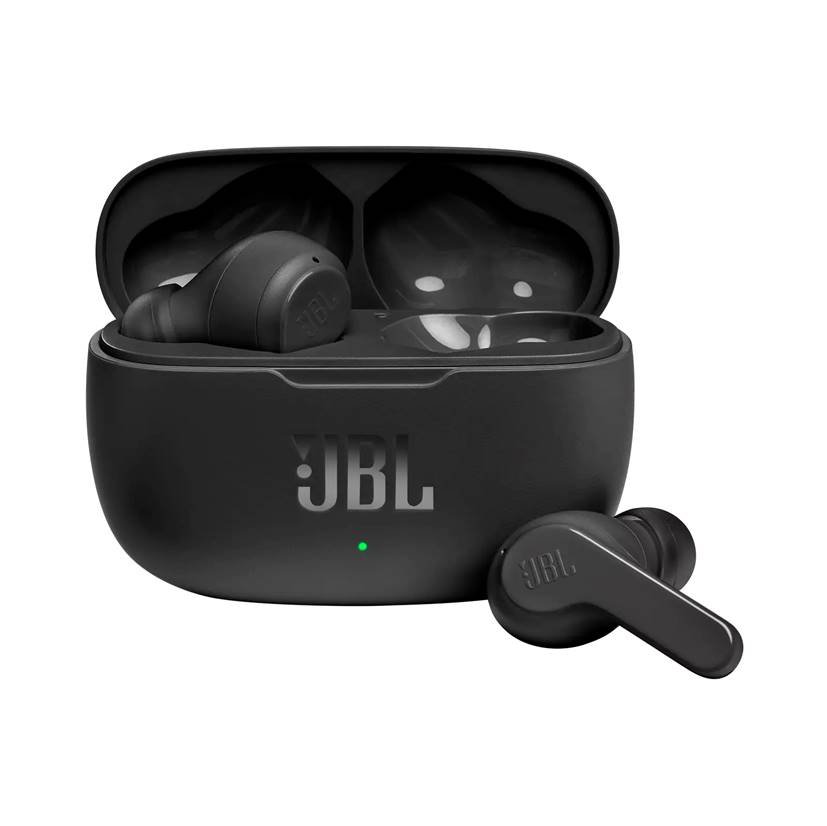
With 5 hours in the earbuds and 15 hours in the case, the JBL Wave 200TWS don’t drop until you do. Feel the sound with the Deep Bass powered by the 8mm Dynamic drivers and add fun to your routine. Running Low on Charge, worry not. A quick 15min of charge provides you with playtime upto an Hour. Just a touch of the earbud is what you need to control calls, sound or your mobile device’s voice assistant and stay in touch with your world. With the Dual Connect Technology on the Wave 200 TWS, take calls or listen to music with either bud (or both). Choose which one to use and leave the other one in the case to save battery life. |

Advertisement
Compare JBL E25BT with:
Compare JBL Wave 200TWS with:
Top Differences
- Battery Life: 8 Hours vs 20 H ( 5 H + 15 H ) Hours
- Bluetooth: 4.1 vs 5.0
- Weight: 16.5 gm vs 47.5 Gm
Advertisement