 ALERT
ALERT
| Specification | ||
|---|---|---|
| Price | Rs.18,290.00 |
Rs.17,500.00 |
| Brand | JBL |
Sennheiser |
| Model No | JR 460NC |
RS 180 |
| Wired / Wireless | Wireless Headphone Specification |
Wireless Headphone Specification |
| Headphone Type | Over Ear |
Over Ear |
| Magnet Type | Dynamic |
Neodymium |
| Driver Diameter | 32 mm |
NA |
| Impedance | 32 Ohms |
32 ohms |
| Sensitivity | 92 dB SPL@1 kHz / 1 mW |
110 dB |
| Frequency Response | 20 Hz - 20KHz |
18 - 21000 Hz |
| Maximum Power Input | 5V 1A |
NA |
| Wireless / Bluetooth Details | ||
| Wireless Technology | Bluetooth |
Radio Frequency |
| Bluetooth Version | 5.0 |
|
| Compatible Profiles | All Bluetooth Devices |
|
| Supported Codecs | AAC, SBC |
|
| Battery Type | Lithium-Ion Batteries |
AAA NiMH Rechargeable Battery |
| Bluetooth Range | 10 Meters |
|
| Battery Life | 30 Hours |
24 hrs |
| Charging Time | <2 Hours |
16 hrs |
| Noise Cancelling | Active Noise Cancelling |
No |
| Available Colors | White, Blue, Pink |
Black |
| Connector Plating | 3.5 mm Jack |
3.5 mm Gold Plated Jack |
| Cable | USB Type-C Charging Cable |
NA |
| Weight | 200 GM |
204 g (without battery) |
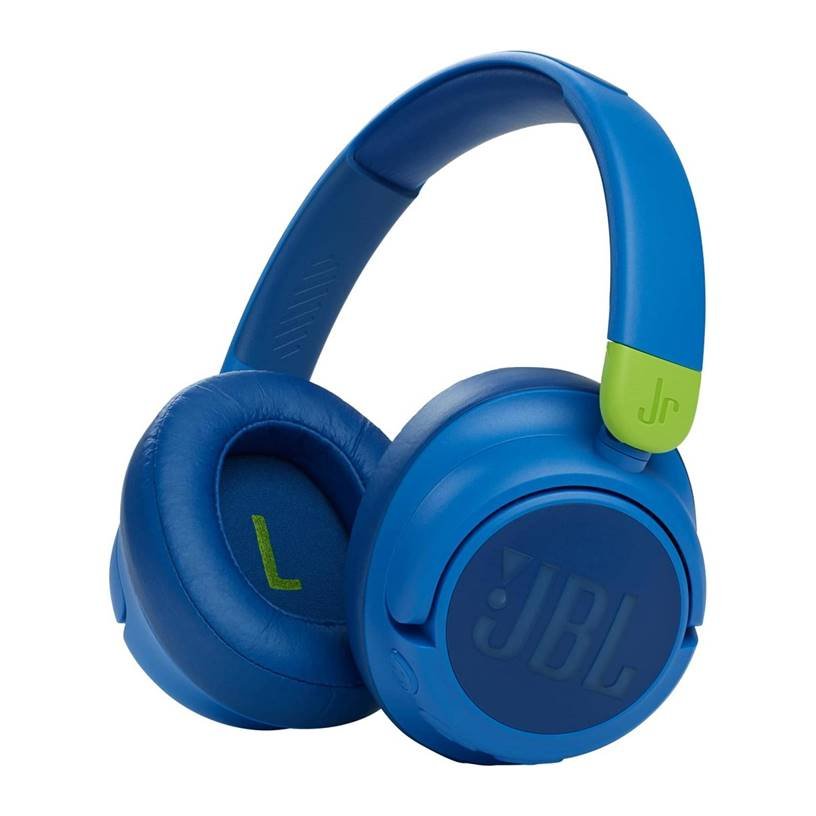
| Other Features | JBL Safe Sound. Communicate with built-in mic. Up To 20 hours of Battery Life with ANC ON. Up To 30 hours of Battery Life with ANC OFF. Help your kids stay connected to the world with the built-in mic. They can chat easily with friends and family during downtime, or teachers while they’re busy learning. Quality sound has no age, but you want to be sure your kids are safe while having fun. With a maximum volume set under 85dB, they’re free to enjoy JBL quality sound, safely. Shut out all that noise and distraction with Active Noise Cancelling. Your kids can stay focused whether they’re listening to music, enjoying their favorite show or learning online. |
- Total Harmonic Distortion (THD): Less than 0.5 % a 1 kHz, 100 dB SPL - Automatic level control for optimum audio levels - Multi-receiver transmission - Up to 4 people listening to the same source - Multi-purpose transmitter - Also functions as easy-charge cradle and docking station - Balance control for right/left volume adjustment |
Compare JBL JR 460NC with:
Compare Sennheiser RS 180 with:
Top Differences
- Battery Life: 24 hrs vs 30 Hours
- Noise Cancelling: No vs Active Noise Cancelling
- Driver Size: NA vs 32 mm
- Weight: 204 g (without battery) vs 200 GM