 ALERT
ALERT
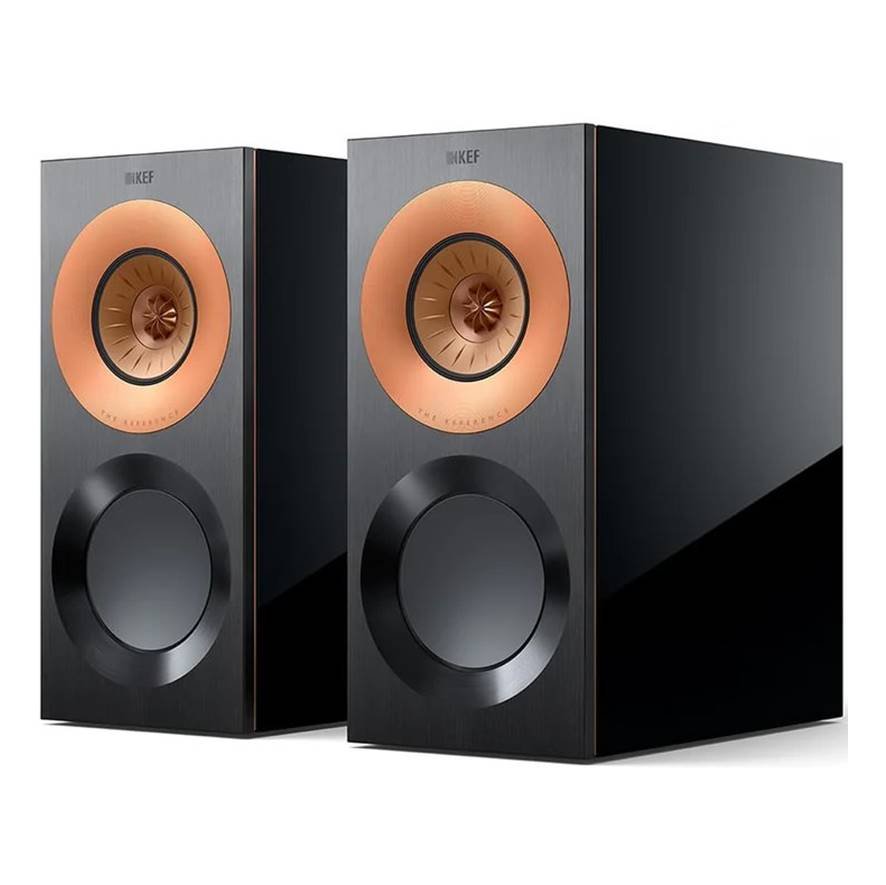
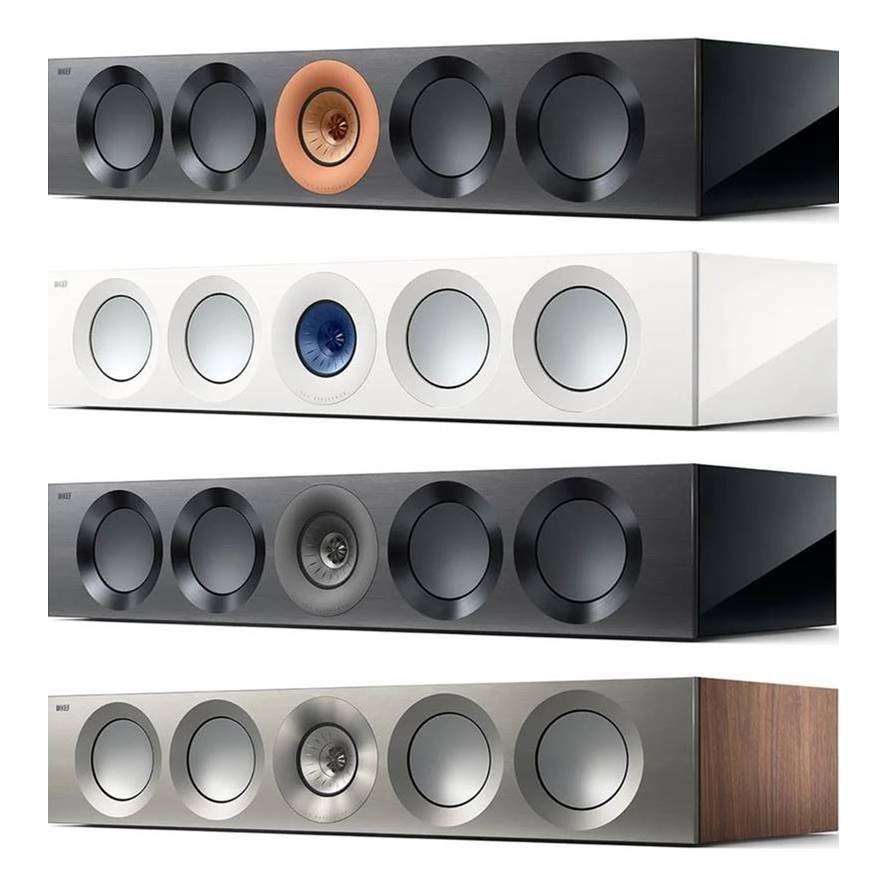
KEF Reference 1 Meta vs KEF Reference 4 Meta
Advertisement
| Specification | ||
|---|---|---|
| Price | 1250000.00 |
950000.00 |
| Brand | KEF |
KEF |
| Model No | Reference 1 Meta |
Reference 4 Meta |
| Wired / Wireless | Home Theatre Speaker Specification |
Home Theatre Speaker Specification |
| Driver Type | Dynamic |
Dynamic |
| Driver Diameter | Uni-Q Driver Array MF : 125 mm Aluminum Cone HF : 25 mm Aluminum Dome With MAT Bass Unit LF : 165 mm Aluminum Cone |
Uni-Q Driver Array HF : 25 mm Aluminum Dome With MAT MF : 125 mm Aluminum Cone Bass Unit LF : 4 X 165 mm Aluminum Cone |
| Impedance | 4 Ohms ( Min. 3.2 Ohms ) |
4 Ohms ( Min.3.2 Ohms ) |
| Sensitivity | 85dB |
88 dB |
| Frequency Response | Crossover Frequency : 450 Hz, 2.1 kHz Frequency Response ( ±3dB ) 45Hz – 35KHz Typical In-Room Bass Response ( -6dB ) : 30Hz Frequency Range Free Field ( -6dB ) : Short Port : 40Hz -45KHz, Long Port : 37Hz - 45KHz Harmonic Distortion 2nd & 3rd Harmonics ( 90dB, 1m ) : <0.5% 40Hz – 100KHz, <0.2% 200Hz – 2KHz, <0.1% 2kHz - 20KHz |
Frequency Response ( ±3dB ) 48 Hz - 35 kHz Crossover Frequency 450Hz, 2.1kHz Typical In-Room Bass Response ( -6dB ) 33 Hz Frequency Range Free Field ( -6dB ) Short Port : 43Hz - 45kHz Long Port : 40Hz - 45kHz |
| Maximum Power Input | NA |
NA |
| Maximum Power Output | 50 - 200 W ( RMS ) Three-Way Bass Reflex |
50 - 400 W ( RMS ) Three-Way Bass Reflex |
| Signal to Noise Ratio | 111dB |
116 dB |
| Noise Cancelling | ||
| Aux Connectivity | No |
No |
| Weight | 18.2 Kg |
45.2 Kg |
| Dimensions | Speaker : 440 mm X 205 mm X 422 mm |
Speaker : 205 mm X 1090 mm X 463 mm |
| Available Colors | Black, White, Blue, Grey, Silver |
Black, White, Blue, Grey, Silver |
| Accessories | KEF Reference 1 Meta Home Theatre Speaker User Manual Warranty Information |
KEF Reference 4 Meta Home Theatre Speaker User Manual Warranty Information |
| Other Features | Available in 5 finishes. Optimised cabinet design for best acoustic performance. Enhanced crossover design fine-tuned the signal path for maximum clarity. The Reference Series Grille set for each model is available as separate item. With mounting inserts to secure on KEF S-RF1 Floor Stand ( available as separate item ). Bespoke 12th generation Uni-Q with MAT driver array for exceptional acoustic accuracy. Metamaterial Absorption Technology eliminates 99% of high-frequency distortion for pure, natural sound. Five Models : Reference 1 Meta, Reference 3 Meta, Reference 5 Meta, Reference 2 Meta, Reference 4 Meta. |
Available in 5 finishes Optimised cabinet design for best acoustic performance. Enhanced crossover design fine-tuned the signal path for maximum clarity. The Reference Series Grille set for each model is available as separate item. With mounting inserts to secure on KEF S-RF1 Floor Stand ( available as separate item ). Bespoke 12th generation Uni-Q with MAT driver array for exceptional acoustic accuracy. Metamaterial Absorption Technology eliminates 99% of high-frequency distortion for pure, natural sound. For movie lovers looking for total immersion, Reference 4 Meta is the last word in absolute quality. Featuring four bass drivers and 12th generation Uni-Q® driver array with MAT™, this centre speaker (can be used as Left-Centre-Right speaker) is a revelation for clarity, detail and emotional depth. |
Advertisement
Compare KEF Reference 1 Meta with:
Compare KEF Reference 4 Meta with:
Top Differences
- Frequency Response: Crossover Frequency : 450 Hz, 2.1 kHz Frequency Response ( ±3dB ) 45Hz – 35KHz Typical In-Room Bass Response ( -6dB ) : 30Hz Frequency Range Free Field ( -6dB ) : Short Port : 40Hz -45KHz, Long Port : 37Hz - 45KHz Harmonic Distortion 2nd & 3rd Harmonics ( 90dB, 1m ) : <0.5% 40Hz – 100KHz, <0.2% 200Hz – 2KHz, <0.1% 2kHz - 20KHz vs Frequency Response ( ±3dB ) 48 Hz - 35 kHz Crossover Frequency 450Hz, 2.1kHz Typical In-Room Bass Response ( -6dB ) 33 Hz Frequency Range Free Field ( -6dB ) Short Port : 43Hz - 45kHz Long Port : 40Hz - 45kHz
- Subwoofer Size: 125 mm vs 25 mm
Advertisement