| Model No |
32HIB |
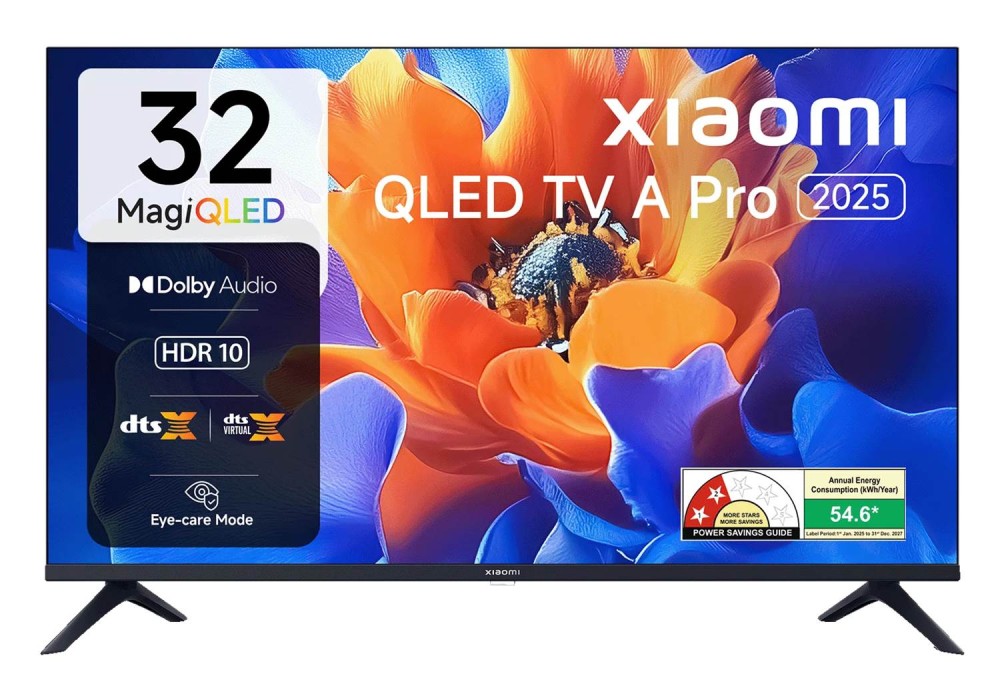
Xiaomi Smart TV A Pro QLED Series 32 |
| TV Type |
Smart TV |
Smart TV |
| Screen Size |
32 Inch (80 cm) |
32 Inch (80 cm) |
| Resolution |
1366 x 768 |
1366 x 768 |
| Aspect Ratio |
16:9 |
16:9 |
| Motion Rate |
60 Hz |
60 Hz |
| Viewing Angle |
178°/178° |
178°/178° |
| USB |
| USB Version |
: 2.0 |
| Supported Audio Formats |
: MP3, AAC, WMA |
| Supported Video Formats |
: AVI, MKV, WMV, MP4, M4V, FLV, 3GPP, VRO, VOB |
| Supported Picture Formats |
: JPG, JPEG |
|
| USB Version |
: 2.0 |
| Supported Audio Formats |
: Dolby, DTS, MP3, FLAC, AAC, OGG, ADPCM, OPUS |
| Supported Video Formats |
: AV1, H.265, H.264,H.263, VP8/VP9, MPEG 1/2, MJPEG |
| Supported Picture Formats |
: JPG,PNG, GIF, BMP |
|
| Video |
| Backlight |
: LED |
| Brightness |
: 300 Nits |
| Contrast Ratio |
: 900 Static |
| Colors |
: 16.7 M Colours |
| Picture Modes |
: Vivid, Cinema, News, Sports, Normal |
|
| Backlight |
: HD MagiQLED |
| HLG |
: Yes |
| HDR10 |
: Yes |
| DC Dimming |
: Yes |
| Eye-Care Mode |
: Yes |
| Wde Color Gamut |
: Yes |
| 16.7 Million Colors |
: Yes |
| Low Blue Light Mode |
: Yes |
| Picture Engine |
: Vivid Picture Engine 2 |
|
| Audio |
| Audio Output ( RMS ) |
: 8 W + 8 W |
| Number of Speakers |
: 2 |
| Surround Sound |
: Yes |
|
| Audio Output ( RMS ) |
: 20 W |
| DTS:X |
: Yes |
| Dolby Audio |
: Yes |
| DTS Virtual:X |
: Yes |
|
| Connectivity Options |
| HDMI |
: 3 |
| USB |
: 2 |
| VGA |
: 1 Yes |
| AV Input |
: 1 Yes |
| AV Output |
: Yes |
| Component |
: Yes |
| Ethernet ( RJ45 ) |
: Yes |
| WI-FI |
: Yes |
| Headphone |
: Yes |
| RF Input |
: Yes |
| Built-in Wi-Fi |
: Yes |
| PC- Audio |
: Yes |
| SPDIF - Out |
: Yes |
|
| HDMI ( 2.1 ) |
: 2 |
| USB ( 2.0 ) |
: 2 |
| AV 1 |
: Yes |
| Antenna 2 |
: Yes |
| Bluetooth |
: Yes |
| Earphone 1 |
: Yes |
| Ethernet / LAN |
: Yes |
| WiFi |
: Dual Band Wifi |
|
| Smart TV Features |
| Operating System |
: Android 4.4 |
| Processor-Type |
: Quad Core |
| RAM |
: 1 GB |
| ROM |
: 4 GB / 8GB |
| Netflix |
: Yes |
| Hotstar |
: Yes |
| YouTube |
: Yes |
| Google Play Store |
: Yes |
| Google Play Music |
: Yes |
| Google Play Game |
: Yes |
| Google Play Movies & TV |
: Yes |
| Web Browsing |
: Yes |
|
| Operating System |
: Google TV |
| Android Version |
: Android 14 |
| CPU |
: Quad Core A53 |
| GPU |
: Mali-G31 MP2 |
| RAM |
: 1 GB |
| ROM |
: 8 GB |
| Netflix |
: Yes |
| YouTube |
: Yes |
| Xiaomi TV+ |
: Yes |
| Prime Video |
: Yes |
| Latest PatchWall |
: Yes |
| Free Live TV Channels |
: Yes |
| Voice Assistant Built-in |
: Google Voice Assistant |
| Casting |
: Google Cast & Miracast |
|
| Other Features |
| Panel Type |
: ADS LED Panel |
| Color |
: Black |
| Qwerty Air Mouse |
: Yes |
| Parental Control |
: Yes |
| Smart Remote |
: Yes |
| Other Remote Control Features |
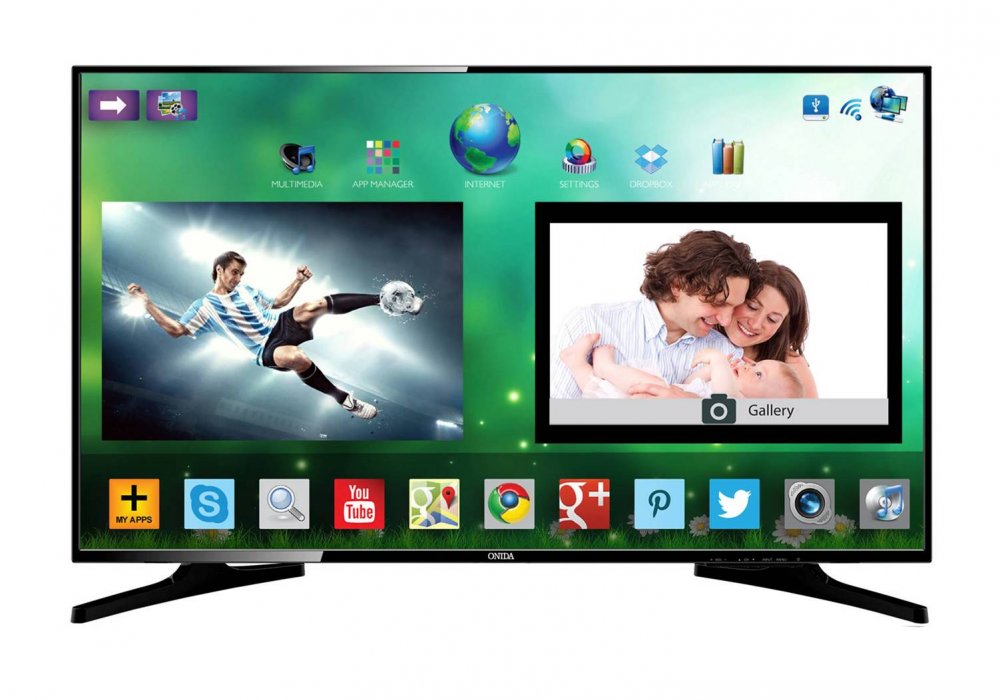
: First Qwerty Keyboard - Imagine a Remote Control. That's a quick preview of Onida's Web Cruiser Qwerty remote. With the full built-in keyboard, enter precise keywords and web address you want to search. |
|
| Design |
: Premium Metal Bezel-Less Design |
| Color |
: Black |
| Kids Mode |
: Yes |
| Parental Lock |
: Yes |
| Ambient Mode |
: Yes |
| Universal Search |
: Yes |
| Language Universe |
: Yes |
| Warranty |
: 1+1 Year Warranty |
| Remote |
: Numerical Keypad + Quick Settings ( Long Press The PatchWall Botton To Enter Quick Settings ) + Quick Wake ( Turn On TV In Less Than 5 sec ) |
|
| General Details |
| Power Requirements |
: 100 ~ 240 VAC ; 50Hz / 60Hz |
| Power Consumption |
: 80 W |
| Power Consumption Standby |
: 1 W |
| Pixel Pitch ( H x V ) |
: 697.685 mm x 392.256 mm |
| Product Weight |
: 7.1 Kg |
|
| Power Supply ( Voltage, Hz ) |
: AC 100-240V ~ 50/60Hz |
| Power Consumption |
: 50 W |
| Power Consumption Standby |
: 0.5 W |
| Weight Without Stand |
: 3.1 Kg |
| Weight Including Packing |
: 4.5 Kg |
| Relative Humidity |
: <80% |
| Humidity |
: 20% ~ 80% |
| Temperature |
: 0℃ ~ 40℃ |
| Storage Temperature |
: -15℃ ~ 45℃, |
| Wall Mount |
: 200 mm X 100 mm |
|
| Supplied Accessories |
| Remote Control |
: Yes |
| Batteries |
: Yes |
| User Manual |
: Yes |
| Warranty Card |
: Yes |
| Table Top Stand |
: Yes |
| Wall Mount |
: Yes |
|
| 1N Remote Control |
: Yes |
| 4N Screws |
: Yes |
| 1N Power Cord |
: Yes |
| 1N User Manual |
: Yes |
| 2N AAA Batteries |
: Yes |
| 2N Table Stand Set |
: Yes |
|
 ALERT
ALERT