 ALERT
ALERT
Sennheiser PX-210-BT vs JBL Junior 320BT
Advertisement
| Specification | ||
|---|---|---|
| Price | Rs.15,500.00 |
Rs.15,178.00 |
| Brand | Sennheiser |
JBL |
| Model No | PX-210-BT |
Junior 320BT |
| Wired / Wireless | Wireless Headphone Specification |
Wireless Headphone Specification |
| Headphone Type | On Ear |
On Ear |
| Magnet Type | Neodymium |
Dynamic |
| Driver Diameter | NA |
32 mm |
| Impedance | 100 Ohms |
34 Ohms |
| Sensitivity | 107 dB/mW |
80 dB SPL@1 kHz |
| Frequency Response | 15 Hz - 22,000Hz |
20 Hz - 20KHz |
| Maximum Power Input | NA |
5 V 1 A |
| Wireless / Bluetooth Details | ||
| Wireless Technology | Bluetooth |
Bluetooth |
| Bluetooth Version | Version 2.1 + EDR |
5.3 |
| Compatible Profiles | A2DP, AVRCP |
All Bluetooth Devices |
| Supported Codecs | SBC, apt-X |
AAC, SBC |
| Battery Type | Lithium-ion rechargeable battery |
Lithium-Ion Batteries |
| Bluetooth Range | 10 m |
10 Meters |
| Battery Life | 10 Hrs |
50 Hours |
| Charging Time | 3 Hrs |
< 2 Hours |
| Noise Cancelling | NA |
Active Noise Cancelling |
| Available Colors | Black |
Purple |
| Connector Plating | 3.5 mm Gold Plated Jack |
NA |
| Cable | 1.4 m |
USB Type-C Charging Cable |
| Weight | 105 g |
124.5 GM |
| Other Features | - Neodymium magnets and Duofol diaphragms for excellent sound reproduction - Supports apt-X® - Sophisticated audio compression technique for true hi-fi quality (apt-X® is a registered trademark of Audio Processing Technology Ltd) - Collapsible design with metal-reinforced headband ensures portability and durability - Integrated track and volume controls for enhanced usability and convenience - Optimised for MP3, CD and DVD players, iPod, iPhone (iPod and iPhone are trademarks of Apple Inc. registered in the U.S. and other countries) and mobile phones (3.5mm stereo plug) - 2 year warranty |
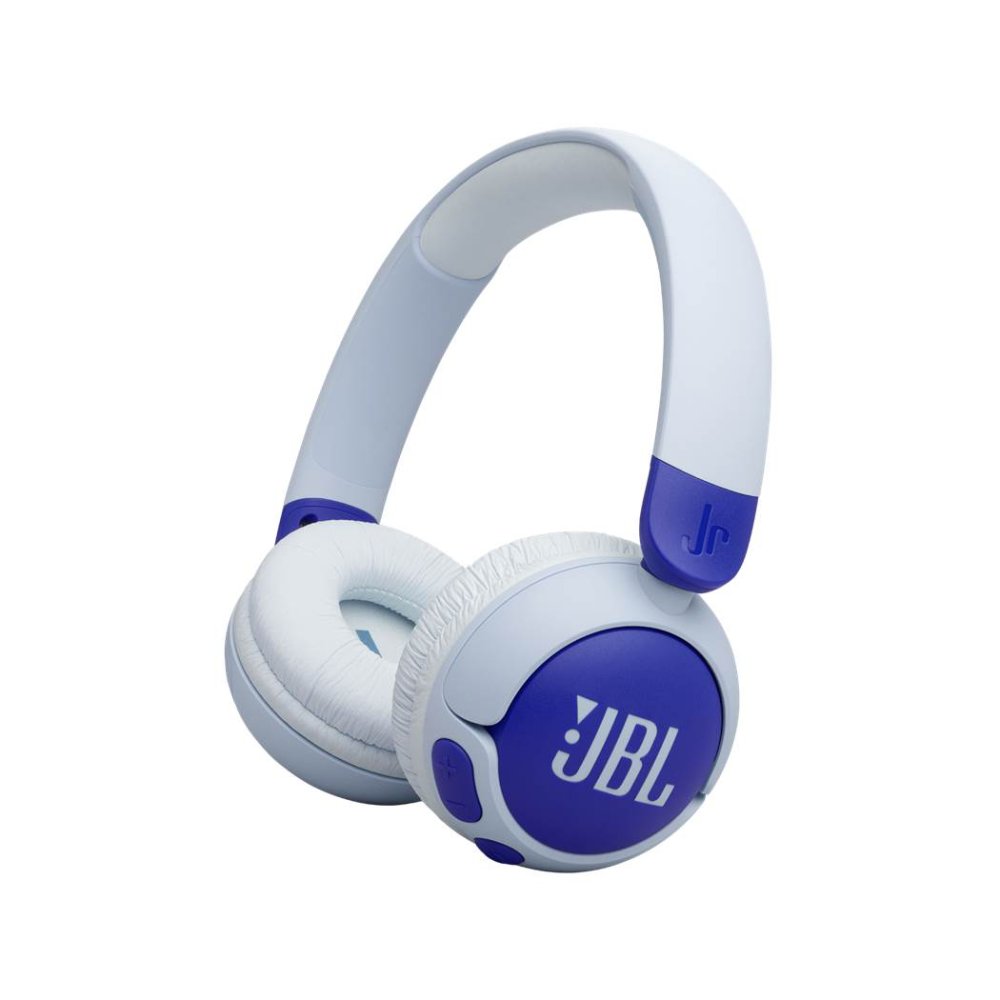
JBL Safe Sound <85dB : JBL Junior 320BT headphones are designed to never exceed 85dB. This way your kids can enjoy the same great sound that made JBL a legend, at a volume that is always safe for their ears. Built-In Mic : JBL Junior 320BT headphones feature a built-in microphone to help your kids stay connected with the world. They can talk with teachers while they’re learning, or chat with friends and family during their downtime. Easy Monitoring : Use the JBL Headphones app for real-time reports on how long kids are listening and at what volume. Check daily and weekly usage and volume reports. And set up your own PIN code to protect your settings. 50-Hour Battery Life : JBL Junior 320BT headphones offer a long 50-hour battery life and recharge quickly with user-friendly USB-C cables. For a super-quick boost, five minutes of charge will give you another three hours of battery life. Parental Control With Customizable Volume & Playtime : Use the automatic 85dB maximum volume limit, or customize a lower one. You can also customize hearing protection settings by limiting both maximum volume and daily listening time. |

Advertisement
Compare Sennheiser PX-210-BT with:
Compare JBL Junior 320BT with:
Top Differences
- Battery Life: 10 Hrs vs 50 Hours
- Noise Cancelling: NA vs Active Noise Cancelling
- Driver Size: NA vs 32 mm
- Bluetooth: Version 2.1 + EDR vs 5.3
- Weight: 105 g vs 124.5 GM
Advertisement