 ALERT
ALERT
Unix Elite 10 Rewind vs Unix UX-HP10 Tango Compact TWS
Advertisement
| Specification | ||
|---|---|---|
| Price | Rs.799.00 |
Rs.799.00 |
| Brand | Unix |
Unix |
| Model No | Elite 10 Rewind |
UX-HP10 Tango Compact TWS |
| Wired / Wireless | Wireless Headphone Specification |
Wireless Headphone Specification |
| Headphone Type | Neckband |
In Ear |
| Magnet Type | Dynamic |
Dynamic |
| Driver Diameter | 10 mm |
13 mm |
| Impedance | 10 Ohms |
16 Ohms |
| Sensitivity | NA |
NA |
| Frequency Response | 20Hz - 20KHz |
20Hz - 20KHz |
| Maximum Power Input | DC 5V |
DC 5V |
| Wireless / Bluetooth Details | ||
| Wireless Technology | Bluetooth |
Bluetooth |
| Bluetooth Version | 5.0 |
5.3 |
| Compatible Profiles | All Bluetooth Devices |
All Bluetooth Devices |
| Supported Codecs | SBC, AAC |
SBC, AAC |
| Battery Type | Lithium-Ion Batteries |
Lithium-Ion Batteries |
| Bluetooth Range | 10 Meters |
16 Meters |
| Battery Life | 48 Hours |
40 Hours |
| Charging Time | 2 Hours |
2 Hours |
| Noise Cancelling | NA |
Active Noise Cancelling |
| Available Colors | Black, Blue, Grey, Gold, Silver |
White |
| Connector Plating | No |
No |
| Cable | USB Type-C Charging Cable |
USB Type-C Charging Cable |
| Weight | 100 GM |
25 GM |
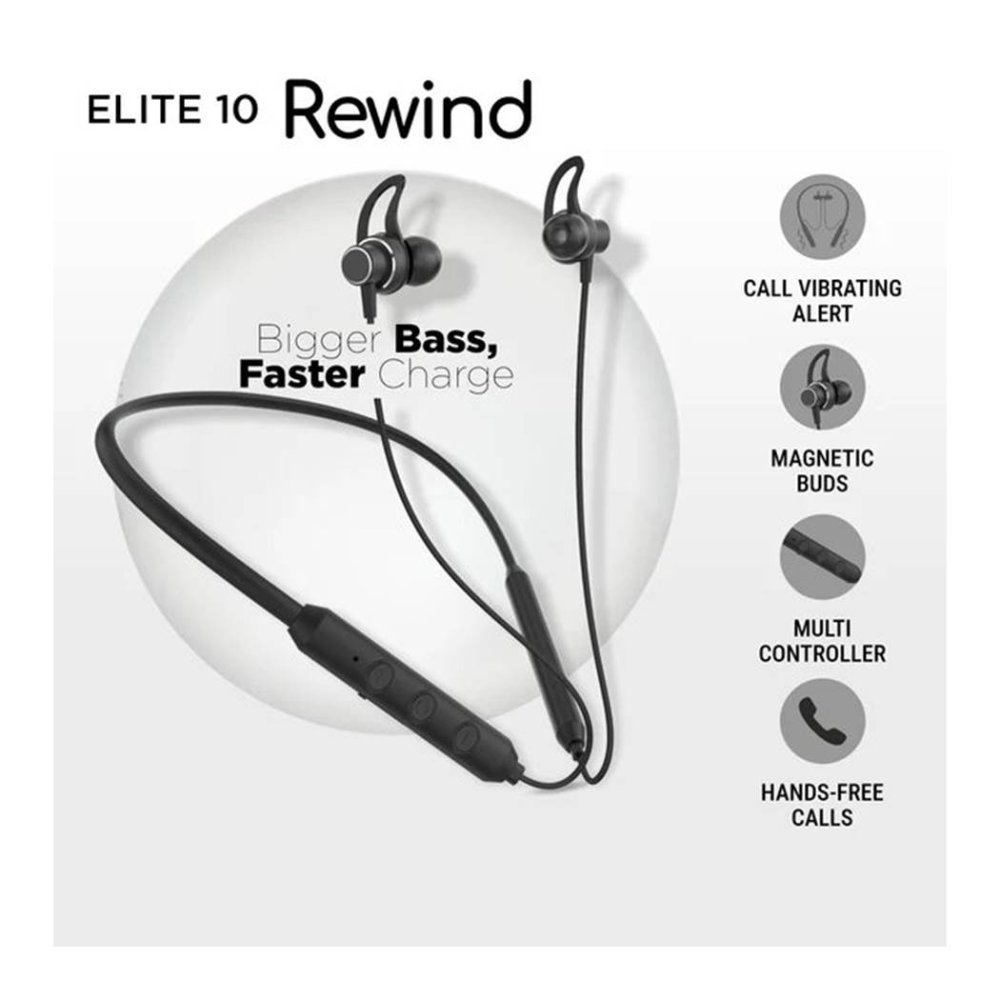
| Other Features | HD sound. 24 hours of talk time. Vibration alert feature. Multi-controller function. Remarkable clarity and depth. Bass-driven audio experience. Powerful 200MAH battery capacity. Unix Elite 10 Rewind Wireless Neckband : HD Sound Online With the Elite 10 Rewind, you'll never miss an important call thanks to the call vibration alert feature. Stay connected and notified even when your phone is out of reach. Experience HD sound that brings your favorite music to life with remarkable clarity and depth. Immerse yourself in a world of immersive audio pleasure. |
Premium Silicon Case : Stylish and protective storage. HD Stereo Sound : Immersive audio with precise bass. Type-C Fast Charging : Quick and efficient power-ups. Touch Controls : Effortless management of music and calls. 40 Hours Playtime : Non-stop music for extended enjoyment. Hi-Fi Dual Drivers : Enhanced sound clarity with 13mm drivers. Economic Design : Superior performance at an affordable price. The UNIX UX-HP10 TWS Earbuds redefine wireless audio with a blend of performance and comfort. Boasting up to 40 hours of total playtime and a snug ergonomic fit, these earbuds are designed for extended listening sessions. The 13mm hi-fi dual drivers deliver HD stereo sound with precise bass, ensuring an immersive audio experience. Convenient touch controls make managing music and calls effortless, while Type-C fast charging keeps you powered up in no time. Complete with a premium silicon case for added protection, the UX-HP10 combines affordability with superior sound quality. |

Advertisement
Compare Unix Elite 10 Rewind with:
Compare Unix UX-HP10 Tango Compact TWS with:
Top Differences
- Battery Life: 48 Hours vs 40 Hours
- Noise Cancelling: NA vs Active Noise Cancelling
- Driver Size: 10 mm vs 13 mm
- Bluetooth: 5.0 vs 5.3
- Weight: 100 GM vs 25 GM
Advertisement